
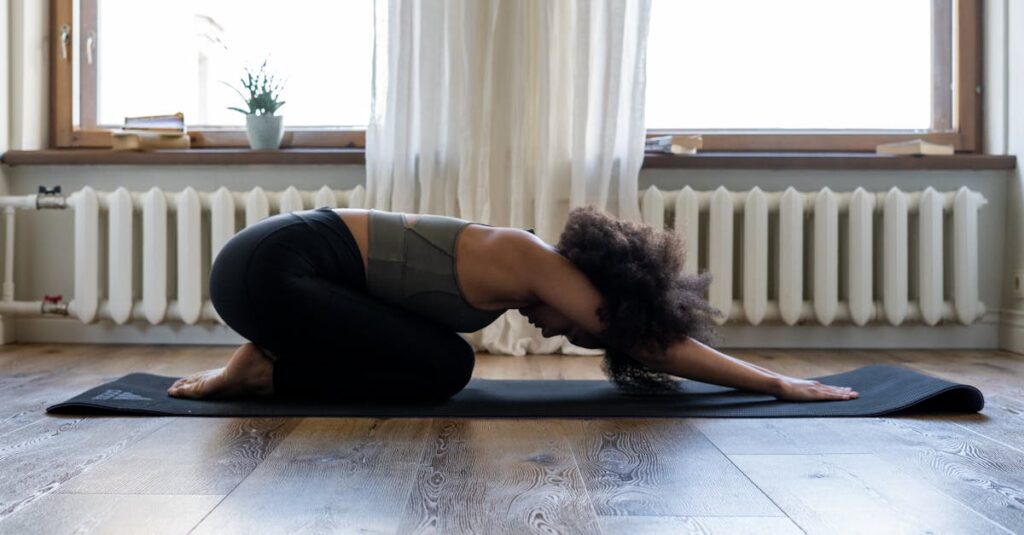
In a world that rewards speed, productivity, and constant doing, slowing down can feel almost uncomfortable.
Yin yoga offers something radically different.
It’s a practice of stillness, patience, and listening. One that doesn’t ask you to perform, push, or improve – but to stay. To feel. To soften.
And for many women, that’s exactly what’s missing.
What Is Yin Yoga?
Yin yoga is a slow, meditative style of yoga where poses are held for longer periods of time, usually between three and five minutes, sometimes longer.
Unlike more dynamic forms of yoga that focus on muscle engagement and movement, yin yoga works with:
- deep connective tissues (fascia, ligaments, joints)
- the parasympathetic nervous system
- stillness and inner awareness
The poses are mostly practiced on the floor and are designed to be accessible, gentle, and supportive.
Yin yoga isn’t about flexibility in the traditional sense. It’s about creating space – physically, emotionally, and mentally.
Why Yin Yoga Is So Powerful for the Nervous System
From a holistic health perspective, yin yoga is deeply regulating.
Long-held poses combined with slow breathing signal safety to the nervous system. This allows the body to shift out of fight-or-flight and into rest-and-digest mode.
Over time, this can help:
- reduce chronic stress
- improve sleep quality
- support emotional regulation
- increase body awareness
- calm mental overactivity
Many people are surprised by how challenging yin yoga can feel – not physically, but emotionally. Stillness has a way of bringing things to the surface.
And that’s not a problem. It’s part of the practice.
Yin Yoga and Emotional Release
Because yin yoga works with deep tissues and encourages stillness, emotions can arise during practice.
This might look like:
- sudden sadness or tenderness
- restlessness or irritation
- a sense of relief or grounding
- unexpected insight or clarity
Yin yoga doesn’t force emotional release, but it creates the conditions for it.
By staying present with sensation instead of distracting ourselves, we build emotional capacity. We learn that we can be with discomfort without needing to fix it.
That skill carries far beyond the mat.
Yin Yoga Is Not About Pushing
One of the most important principles of yin yoga is finding your edge – the place where you feel sensation but not strain.
There is no benefit in forcing a pose deeper.
Yin yoga teaches discernment:
- when to stay
- when to soften
- when to back off
This translates beautifully into everyday life, especially for women who tend to override their needs.
The practice becomes a conversation with your body rather than a demand.
Who Yin Yoga Is Especially Helpful For
Yin yoga can be supportive for many people, but it’s particularly helpful if you:
- feel chronically stressed or overwhelmed
- have trouble slowing down or resting
- experience emotional tension in the body
- are healing from burnout
- want to reconnect with your body gently
- already do a lot of yang or high-intensity movement
It balances a fast-paced lifestyle with intentional slowness.
What Yin Yoga Is (and Isn’t)
Yin yoga is:
- slow
- quiet
- inward
- grounding
Yin yoga is not:
- passive or ineffective
- about forcing flexibility
- a replacement for all other movement
- meant to feel “easy” all the time
It’s complementary. Just like rest complements activity.
Yin Yoga as a Practice of Self-Trust
Perhaps the most powerful aspect of yin yoga is what it teaches off the mat.
It teaches you to:
- listen instead of override
- stay present instead of distract
- trust sensation instead of fear it
- honor your limits without guilt
Over time, this strengthens self-trust – a foundation for emotional health, clarity, and resilience.
A Gentle Invitation
You don’t need to practice yin yoga perfectly. You don’t need the “right” body, mindset, or level of flexibility.
You just need willingness.
Willingness to pause.
Willingness to feel.
Willingness to slow down.
If you’re craving more grounding, nervous system support, and a softer relationship with yourself, yin yoga can be a beautiful place to begin.
And if you’d like guidance in building practices that support both your body and emotional wellbeing, I offer holistic coaching for women who want to feel calmer, clearer, and more at home in themselves.
Sometimes the deepest shifts happen in stillness.
Wondering if coaching is right for you? Check out how my coaching process works.